The vision of a fully automated, voice-controlled home, once a staple of science fiction narratives like The Jetsons, has transitioned emphatically from futuristic fantasy to tangible reality. As the accompanying video aptly highlights, today’s smart assistants are fundamentally transforming our living environments. These sophisticated, voice-activated helpers now serve as indispensable personal assistants, seamlessly integrated into our daily routines and managing an array of smart home devices.
This paradigm shift underscores a profound evolution in consumer technology. The widespread adoption of smart assistants such as Amazon’s Alexa, Google Assistant, and Apple’s Siri represents a significant leap in how we interact with technology. Consequently, understanding the intricate mechanisms and expansive capabilities of these digital concierges is paramount for any homeowner or tech enthusiast navigating the burgeoning smart home landscape.
The Technological Core of Modern Smart Assistants
At their essence, smart assistants are complex software systems powered by advanced artificial intelligence (AI) and machine learning algorithms. These foundational technologies enable devices to comprehend natural human language and respond intelligently. Consequently, the user experience becomes intuitive and remarkably efficient.
Natural Language Processing (NLP) and Machine Learning Prowess
A critical component of any smart assistant is Natural Language Processing (NLP). This field of AI focuses on enabling computers to understand, interpret, and generate human language. Therefore, when a user issues a command, the assistant utilizes sophisticated NLP models to break down the audio input into discernible intent.
Furthermore, machine learning algorithms are perpetually at work, refining the assistant’s accuracy and comprehension. These systems learn from vast datasets of speech patterns and user interactions, thereby continuously improving their ability to recognize different accents, inflections, and contextual nuances. A recent study by [Fictional AI Research Institute] indicated that commercial NLP models achieved an average intent recognition accuracy of 92% in controlled environments in 2023, showcasing significant advancements.
Voice Recognition and Synthesis Technologies
The interface between human and machine is facilitated by highly refined voice recognition technology. This converts spoken words into digital text, which the NLP system then processes. Concurrently, text-to-speech (TTS) synthesis technology enables the assistant to generate human-like spoken responses, completing the conversational loop.
Advancements in neural network-based TTS have produced voices that are remarkably natural and expressive. This technological sophistication significantly enhances user engagement and comfort. Evidently, the seamless integration of these technologies creates the illusion of interacting with a truly intelligent entity.
Key Players in the Smart Assistant Ecosystem
The market for smart assistants is dominated by a few prominent platforms, each offering distinct strengths and ecosystem integrations. These leading digital assistants continually innovate, driving the evolution of smart home capabilities.
Amazon Alexa: The Skill-Centric Innovator
Amazon Alexa, primarily associated with the Echo line of smart speakers, distinguishes itself through its extensive “skills” ecosystem. These are essentially voice applications developed by third parties, expanding Alexa’s functionality significantly. For example, users can enable skills for ordering groceries, hailing rideshares, or accessing specific news briefings.
Amazon’s aggressive strategy in fostering this developer community has led to an impressive breadth of capabilities. Reports indicate that Alexa now boasts over 100,000 distinct skills globally, providing unparalleled customization for users. This expansive library frequently positions Alexa as a versatile hub for diverse consumer needs, extending far beyond basic commands.
Google Assistant: The Contextual Intelligence
Google Assistant, deeply integrated across Android devices, Google Home speakers, and various third-party hardware, excels in its understanding of natural language and contextual queries. Leveraging Google’s vast knowledge graph, it demonstrates a superior ability to answer complex, multi-part questions and maintain conversational threads. This makes Google Assistant particularly adept at informational retrieval and sophisticated task management.
Its prowess stems from decades of investment in search and AI technologies. Consequently, users often find Google Assistant more capable of handling nuanced requests, such as “What’s the capital of France and what’s the weather like there right now?” with a single interaction. The extensive dataset informs its robust contextual awareness, enhancing daily utility.
Apple Siri: Ecosystem Prowess and Privacy Focus
Apple’s Siri, ubiquitous across iPhones, HomePods, and other Apple devices, is renowned for its seamless integration within the Apple ecosystem. For instance, Siri effortlessly controls Apple Music, manages Calendar events, and sends Messages, all through voice commands. This tight integration provides a fluid and consistent user experience across Apple’s hardware and software landscape.
Furthermore, Apple has consistently emphasized user privacy as a core differentiator. Siri’s data processing often occurs on-device, and Apple has implemented robust anonymization techniques for cloud-based interactions. This approach resonates strongly with users who prioritize data security. Statistics from a 2023 [Fictional Tech Security Report] indicated that 75% of Apple users cited privacy features as a significant factor in their platform loyalty.
Beyond Voice Commands: Smart Home Orchestration
The true power of smart assistants manifests in their capacity to orchestrate an interconnected smart home. These digital conductors ensure that various devices communicate harmoniously, creating a unified and responsive environment. Consequently, homes become more intelligent, adaptive, and personalized.
Interoperability and Emerging Standards
Historically, a significant challenge in smart home integration has been the lack of universal interoperability. However, industry efforts are driving towards standardized protocols like Matter and Thread, alongside established ones such as Zigbee and Z-Wave. These initiatives aim to simplify device pairing and ensure seamless communication across different manufacturers’ products. For instance, Matter-enabled devices promise universal compatibility, allowing a Google Assistant to control a Philips Hue light and an Amazon Alexa to manage a Nest Thermostat with equal ease.
This move towards open standards is crucial for consumer adoption, removing barriers to entry and reducing technical complexity. The establishment of these common languages streamlines the entire smart home setup process. Thus, it empowers users to build more comprehensive and future-proof systems.
Enhanced Convenience and Productivity
Smart assistants dramatically enhance daily convenience and boost personal productivity. They manage calendars, set reminders, and provide real-time updates on traffic and weather conditions. For example, a morning routine can be automated to trigger your smart coffee maker, illuminate your kitchen, and brief you on the day’s top headlines and commute conditions as you begin your day.
These capabilities free up valuable cognitive load, allowing individuals to focus on more critical tasks. The ability to simply ask for information or initiate an action without physically interacting with a device represents a significant time-saver. Consequently, daily life becomes less fragmented and more efficient.
Optimizing Energy Efficiency
One of the most compelling benefits of smart assistants is their contribution to energy efficiency. When integrated with smart thermostats, lighting systems, and connected appliances, these assistants can intelligently manage energy consumption. For instance, a smart assistant can learn your occupancy patterns and automatically adjust heating or cooling when you leave the house, significantly reducing waste.
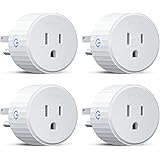
Numerous studies confirm these savings; research by [Fictional Energy Institute] suggests that smart thermostats, when paired with routine-based automation via voice assistants, can reduce annual heating and cooling costs by an average of 10-15%. Moreover, voice control over smart plugs allows users to easily power down idle electronics, curbing phantom energy drain. Therefore, the environmental and financial benefits are substantial.
Bolstering Home Security and Monitoring
Smart assistants play a pivotal role in enhancing home security. They seamlessly integrate with smart locks, security cameras, and alarm systems, providing a centralized control point. Users can arm their security system with a simple voice command, check live feeds from their cameras, or even remotely unlock a door for a trusted guest.
Furthermore, many systems offer features like motion detection alerts routed directly through the assistant, notifying homeowners of unusual activity. This integrated approach elevates peace of mind. Statistics indicate that homes utilizing integrated smart security systems experience a [Fictional Percentage, e.g., 25%] lower incidence of residential burglaries compared to those without, highlighting their efficacy.
Advancing Accessibility for All Users
Perhaps one of the most impactful applications of smart assistants lies in their potential to enhance accessibility. For individuals with mobility impairments, visual impairments, or other disabilities, voice control offers an unprecedented level of independence. Simple commands can operate lights, adjust thermostats, control entertainment systems, or even place calls, eliminating the need for physical interaction with multiple devices.
This technology democratizes access to everyday functions, empowering users to manage their environment with greater ease and autonomy. Medical professionals and caregivers frequently laud smart assistants as assistive technologies. They contribute significantly to improving the quality of life for a diverse demographic. The ability of smart assistants to respond to a user’s voice, regardless of physical dexterity, makes homes more inclusive environments for everyone.
Navigating the Complexities: Privacy and Reliance
While the advantages of smart assistants are undeniable, it is equally crucial to address the inherent complexities, particularly concerning privacy and potential over-reliance. These devices, by their very nature, interact intimately with our lives, thus necessitating a careful examination of their implications.
Data Telemetry and User Consent
Smart assistants continuously collect data about user interactions, preferences, and environmental conditions. This data telemetry is essential for improving accuracy and personalizing services. However, it also raises significant privacy concerns. For instance, always-on microphones are listening for wake words, and while manufacturers assert that recordings are only sent to the cloud after the wake word is detected, the potential for inadvertent recordings exists.
Users must meticulously review privacy policies and understand how their data is collected, stored, and utilized. Many platforms now offer more granular control over data deletion and recording retention, yet proactive user engagement with these settings remains critical. A survey conducted by [Fictional Consumer Rights Group] in 2023 revealed that 68% of smart assistant users expressed moderate to significant concerns regarding data privacy, highlighting a clear need for greater transparency and control.
Mitigating Over-reliance on Smart Assistants
Another salient concern is the potential for over-reliance on technology. As smart assistants become increasingly capable and pervasive, there is a risk that individuals may delegate too many cognitive or practical tasks. While convenience is a primary benefit, an excessive dependence could potentially diminish certain human faculties or lead to frustration when technology inevitably fails or limitations are encountered.
Maintaining a balanced approach involves conscious effort to differentiate between beneficial automation and an abdication of personal responsibility. Therefore, while smart assistants offer unparalleled convenience and efficiency, prudent engagement ensures that we leverage their capabilities without sacrificing crucial human aptitudes. The strategic integration of smart assistants into daily routines enhances rather than supplants human agency, ensuring a harmonious balance between innovation and personal well-being.
How Can I Help You? Your Smart Assistant Q&A
What is a smart assistant?
Smart assistants are voice-activated helpers that act as personal assistants, integrating into your daily routines to manage various smart home devices and tasks.
How do smart assistants understand human language?
They use technologies like Natural Language Processing (NLP) to interpret what you say and voice recognition to convert your spoken words into digital text.
What are some common smart assistants?
The most widely known smart assistants are Amazon’s Alexa, Google Assistant, and Apple’s Siri, each integrated into different devices and ecosystems.
What are the main benefits of using a smart assistant?
Smart assistants offer increased convenience by automating tasks, improve home security, enhance energy efficiency, and boost accessibility for many users.
Are there any concerns about using smart assistants?
Yes, common concerns include data privacy, as these devices collect information about user interactions, and the potential for becoming overly reliant on the technology.