Imagine returning to a darkened home after a long day, fumbling for keys while navigating a dimly lit porch. Subsequently, a desire for enhanced convenience often emerges, prompting many homeowners to consider smart home innovations. While numerous smart home technologies exist, the appeal of smart lights, as explored in the video above, frequently captures significant interest among consumers seeking modern solutions for their living spaces.
Indeed, initial skepticism regarding the utility of smart lights is a common sentiment; the notion of a light bulb costing ten times more than its traditional counterpart can certainly give one pause. However, upon deeper examination and practical implementation, the advantages of intelligent lighting systems become increasingly apparent. Therefore, a comprehensive understanding of both the compelling benefits and the occasional complexities associated with smart lighting is truly essential for informed decision-making.
Exploring Smart Lighting Benefits for a Modern Home
The integration of smart lights into a domestic setting offers several distinct advantages, primarily centered on security, automation, and convenience. Each of these facets contributes to a more comfortable and responsive living environment, justifying the initial investment for many users.
Enhanced Home Security and Peace of Mind
One of the most frequently cited benefits of smart lighting involves its contribution to home security. The ability to illuminate a property remotely, or according to a predetermined schedule, effectively deters potential intruders. Consequently, a home is made to appear occupied, even when residents are away, reducing the likelihood of unwanted attention. Furthermore, the capacity to instantly switch on all interior lights from a smartphone provides an immediate sense of security upon arrival or during unexpected disturbances, offering a reassuring layer of protection.
The Power of Automated Lighting Schedules
Automated lighting represents a significant leap forward in home comfort. Many contemporary smart lights are equipped with scheduling capabilities, allowing for personalized illumination routines that align with daily activities. For example, bright, cool-toned light can be programmed to gradually increase in the morning, serving as a gentle alarm and aiding in wakefulness. During daylight hours, lights are often scheduled to remain off, conserving energy. As evening approaches, a transition to warmer, dimmer light is often preferred, fostering relaxation and preparing the body for sleep. This circadian-rhythm-friendly lighting can profoundly impact well-being, much like a well-tuned orchestra sets the mood for a performance.
Unparalleled Convenience with Voice Control
The sheer convenience offered by smart lights, particularly when integrated with virtual assistants, cannot be overstated. The laborious task of physically traversing a home to switch off numerous lights individually is virtually eliminated. Instead, simple voice commands to devices such as Google Assistant or Alexa can manage entire lighting zones or individual fixtures. This hands-free operation proves incredibly useful in situations where one’s hands are full, or simply when a desire for effortless control prevails. Essentially, the power to command an entire home’s illumination with a mere utterance feels akin to possessing a personal butler dedicated solely to lighting needs.
Addressing Smart Light Challenges and Practical Hurdles
Despite the undeniable advantages, the journey into smart lighting is not always without its obstacles. Several common challenges are frequently encountered by users, ranging from operational quirks to initial setup complexities and financial considerations. Understanding these potential pain points is crucial for managing expectations and planning effectively.
The “Switch Problem”: A Common Frustration
A prevalent issue, often dubbed “the switch problem,” arises when traditional wall switches interfere with smart bulb functionality. When a smart light bulb is installed and configured, its “smart” features rely on a constant power supply. If someone inadvertently or habitually flips the physical wall switch off, the power to the smart bulb is cut, rendering it “offline” and unresponsive to app or voice commands. Subsequently, the smart bulb must be manually re-energized by flipping the wall switch back on before its intelligent functions can resume. This scenario can be a significant source of frustration, disrupting the seamless experience that smart lighting promises.
Navigating Setup Complexity and Connectivity
The initial setup process for smart lights can sometimes prove to be a barrier for new users. Connectivity methods vary widely across brands and products, leading to differing levels of installation difficulty. Some smart lighting systems necessitate a dedicated hub, which connects directly to the home router. While these hubs often provide a more stable and scalable connection for numerous bulbs, they represent an additional cost and another device requiring an electrical outlet. In contrast, many devices operate directly via a smartphone app, leveraging existing Wi-Fi or Bluetooth networks. However, these hub-less systems can sometimes be more finicky during the initial pairing process, occasionally requiring multiple attempts to establish a stable connection. The learning curve for integrating these devices into an existing home automation system can be compared to learning a new language; proficiency requires patience and practice.
The Cost Factor: Investment in Smart Bulbs
One of the most significant considerations for prospective smart light users is the cost. As noted in the accompanying video, smart bulbs generally carry a considerably higher price tag than conventional incandescent or even standard LED bulbs. For instance, a Philips Hue starter set, which includes a hub and a few bulbs, can cost around $70. Individual full-featured smart bulbs might range from $10 to $25, with full-color options, which allow for dynamic ambiance and “party tricks,” often doubling that price. Consequently, outfitting an entire home with smart bulbs can quickly accumulate into a substantial investment, prompting many to consider a phased approach or alternative smart lighting solutions.
Practical Solutions for Integrating Smart Lighting Systems
Despite the challenges, several effective strategies and product types are available to help homeowners successfully integrate smart lighting into their lives. The ideal solution often depends on the scale of the desired implementation and the willingness to engage in minor DIY electrical work.
Starting Small: Individual Smart Bulbs
For those seeking to dip their toes into the smart lighting ecosystem without a significant initial outlay, individual smart bulbs offer an excellent starting point. The C by GE full-color smart LED light bulb, for example, is often cited for its user-friendly setup, particularly for Google Home users, as integration is handled directly through the Google Home app. Although Alexa compatibility is also available, it sometimes requires an additional hub. These standalone bulbs are perfect for single rooms or specific lamps where a touch of smart functionality is desired, acting as a small, contained experiment in home automation.
Investing in Comprehensive Smart Lighting Ecosystems
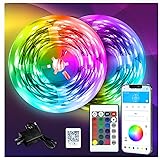
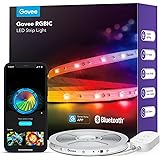
When the ambition extends to a whole-house smart lighting solution, investing in a robust ecosystem like Philips Hue is frequently recommended. The presence of a central hub in these systems facilitates the seamless connection and management of numerous smart bulbs and accessories. Philips Hue, in particular, offers an extensive range of products, including various lamps and light strips, all designed to integrate effortlessly. Furthermore, its broad compatibility with a multitude of other smart home devices and virtual assistants ensures a cohesive and scalable home automation experience. This approach provides a unified control interface, making management of a larger smart lighting network as intuitive as orchestrating a single fixture.
Simple Additions: Smart Plugs for “Dumb” Lamps
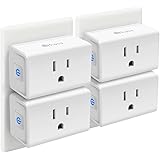
For a remarkably straightforward and cost-effective entry into smart lighting, smart plugs represent an invaluable tool. These devices plug into standard wall outlets, transforming any lamp or appliance plugged into them into a “smart” device. With a simple tap on an app or a voice command, power to the connected device can be controlled. Smart plugs are widely available and generally inexpensive, making them an accessible option for those who wish to add smart control to existing “dumb” lamps without replacing bulbs. The Anker Eufy brand, among others, offers reliable options in this category, proving that sometimes the simplest solutions are the most effective.
The Advanced Approach: Smart Dimmer Switches
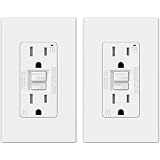
For individuals committed to a lasting smart lighting solution and comfortable with a modest amount of DIY electrical work, smart dimmer switches are an exceptionally effective choice. These switches replace traditional wall switches, providing smart control over any standard, non-smart bulbs connected to that circuit. Critically, this approach resolves “the switch problem” entirely, as the smart switch maintains a constant power supply to the bulbs while managing their on/off and dimming functions intelligently. The Lutron Caseta system, which includes both plug-in dimmers for lamps and in-wall switches, is frequently praised for its reliability and comprehensive control. A crucial piece of advice for this setup: avoid mixing smart switches with smart bulbs on the same circuit, as conflicts can arise. The philosophy here is generally to “pick a lane” – either smart bulbs or smart switches – to ensure optimal performance.
Shedding Light on Your Smart Home Queries
What are smart lights?
Smart lights are intelligent lighting systems that offer enhanced convenience, security, and automation for your home. They can be controlled remotely, scheduled, or operated with voice commands.
What are the main benefits of using smart lights?
Smart lights offer enhanced home security by deterring intruders, allow for automated lighting schedules to match your daily routine, and provide unparalleled convenience with voice control through virtual assistants.
What is ‘the switch problem’ with smart lights?
The ‘switch problem’ occurs when a traditional wall switch is flipped off, cutting power to a smart bulb and making it unresponsive to app or voice commands until the physical switch is turned back on.
Do I need a special hub to use smart lights?
Some smart lighting systems require a dedicated hub that connects to your home router for stable and scalable control. Other devices can operate directly via a smartphone app using your existing Wi-Fi or Bluetooth.
How can I make my existing lamps smart without replacing the bulbs?
You can use smart plugs, which plug into standard wall outlets. When you plug a ‘dumb’ lamp into a smart plug, you can then control its power via an app or voice command, making it smart.